
Share the page
Namibia
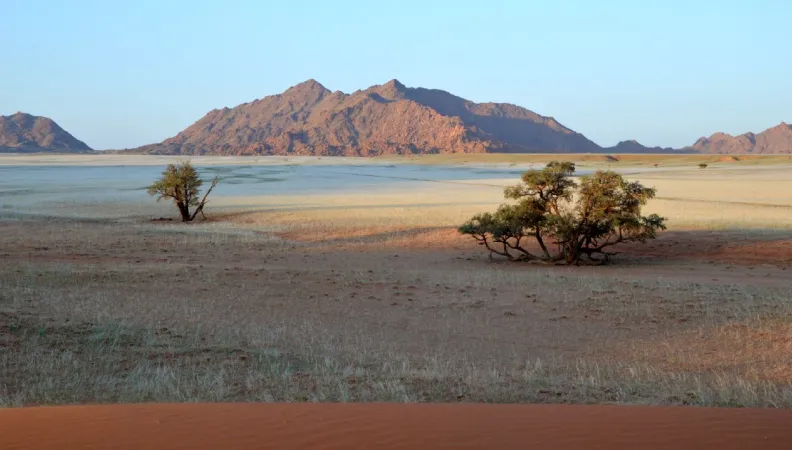
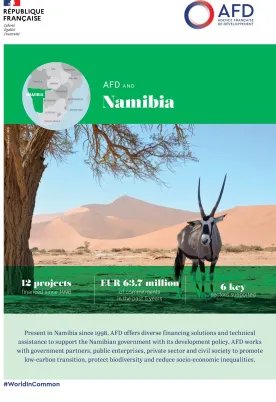
Present in Namibia since 1998, AFD offers diverse financing solutions and technical assistance to support the Namibian government with its development policy. AFD works with government partners, public enterprises, the private sector and civil society to promote a low-carbon transition, protect biodiversity and reduce socio-economic inequalities.
Context
A vast country (one and a half times the size of France) with extremely low population density (three inhabitants per square kilometre), Namibia has around 3,03 million inhabitants. Bordered by the Atlantic Ocean, it shares frontiers with South Africa, Botswana, Zambia and Angola.
Largely covered by desert, Namibia contains the driest zone in sub-Saharan Africa, and recurrent droughts make water a scarce resource. Although less than five percent of its territory is arable, the country has significant mineral resources, notably diamonds and uranium, which make mining a major economic sector. The fishing industry, one of the most productive in the world, is another important source of income and employment.
Despite its political and economic stability, Namibia faces major social challenges: high levels of inequality (the second most unequal country in 2015 according to the Gini index), a high unemployment rate (25 percent of the labour force) and a significant prevalence of HIV (11.5 percent among people aged fifteen to forty-nine in 2019). Yet it remains one of the few countries in sub-Saharan Africa that provides and maintains a social safety net for older people, persons with disabilities, vulnerable children and war veterans.
With a unique natural heritage, Namibia was the first country in the world to integrate environmental protection into its constitution. Nearly six percent of its territory is designated as protected areas, including the coastline of the Namib Desert.
AFD has been active in the country since 1998, offering a range of financing solutions and technical assistance to support the Namibian government’s development agenda. AFD works with a wide array of partners (government, public enterprises, the private sector and civil society) to advance a low-emission transition, protect biodiversity and reduce socio-economic inequalities.
AFD's Namibia office is directly attached to the Southern Africa regional office in Johannesburg.
Our approach
AFD and Namibia: Promoting low-carbon infrastructure to protect biodiversity and revitalize the economy
Due to the limited number of domestic power plants, Namibia imports up to 70% of its electricity from neighboring countries. This electricity is predominantly generated using coal, but the country has the capacity to capitalize on renewable sources of energies. This fact, combined with the intense exploitation of Namibian soils through agriculture, highlight the need to consolidate the sustainable use of natural resources.
To address these challenges, AFD launched SUNREF in 2017, a program designed to help local businesses to green the Namibian economy. Three local banks received a 15-million euro line of credit each to finance projects in the fields of Renewable Energy, Sustainable Agriculture and Tourism. Banks and project sponsors also benefit from one million euros' worth of technical assistance, financed by the Environmental Investment Fund of Namibia to develop profitable green projects.
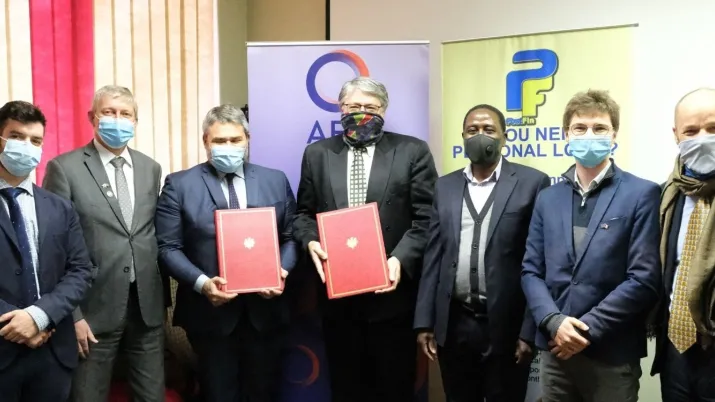
Access to finance is not only an issue for green businesses. It is also a challenge for vulnerable populations who remain excluded from the traditional banking system. The 150,000 Namibian pensioners are particularly vulnerable as they receive their pension in cash, and are not considered as bankable by most of the financial institutions. Therefore, AFD supports the growth of PostFin, a subsidiary of the national postal operator dedicated to microfinance and savings products to low-income populations. This support constitutes a 14.3 million-euro non-sovereign loan in local currency, of which 50% is provided to pensioners.
Beyond microfinance, AFD also supported the Development Bank of Namibia in strengthening two key areas: affordable housing and women’s entrepreneurship. A €300,000 grant has funded market studies and strategic recommendations aimed at designing financial products tailored to low-income households and improving access to credit for women entrepreneurs. The goal is to promote more inclusive growth and reinforce the DBN’s role in sustainable development and gender equality.
After successive years of growth, Namibia’s economy has been in recession since 2017 and is increasingly vulnerable to the effects of the Covid-19 pandemic. In response, the authorities have implemented various fiscal and structural reforms to spur economic activity and growth. One of these measures is the promotion of Public Private Partnerships (PPP). To support the government, AFD is bringing international expertise through a 400,000-euro grant to the Ministry of Finance in the identification of achievable projects and the delivery of training sessions.
AFD is also financing a technical cooperation program between Namport and the French Port of Dunkirk. By encouraging peer-to-peer exchanges and financing consulting services, this project seeks to improve its financial and technical performances from a regional and international perspective while bringing expertise for the implementation of a “green port strategy”.
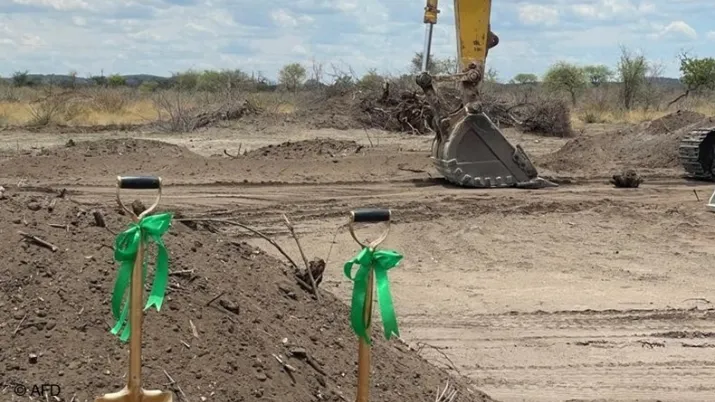
Additionally, NamPower has since 2024 benefited from €100 million in financing from AFD for the construction of a 40 MW biomass power plant in Otshikoto. This project helps strengthen local electricity generation while incorporating an ambitious environmental and social dimension. Thanks to grants from the Mitigation Action Facility (€25 million) and the Fonds Français pour l’Environnement Mondial (€3 million), also delegated to AFD, the project supports the reduction of invasive bush species and promotes the economic inclusion of marginalized communities. These communities take part in harvesting the biomass and benefit from certified training in biodiversity conservation.
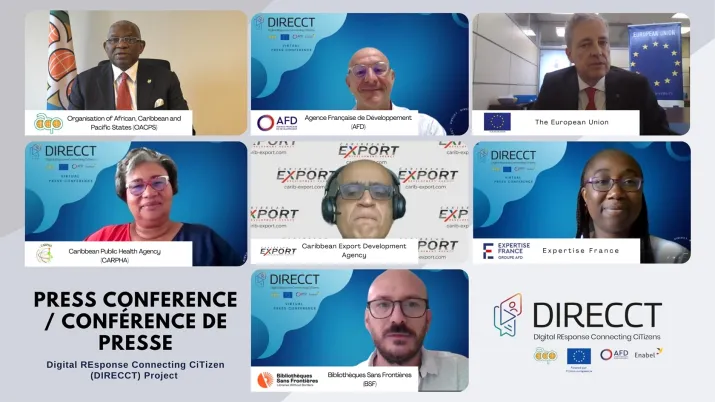
Namibia’s diverse biodiversity has the potential to provide significant economic benefits to the population, not least through tourism revenue. To support the efforts of the authorities, AFD co-finances the Sustainable Wildlife Management (SWM) project, an initiative of the African, Caribbean and Pacific Group of States, coordinated by FAO and funded by the EU.
Namibia remains particularly exposed to climate change. It is considered the driest country in Southern Africa. To increase access to knowledge and strengthen the capacity of the Namibian Government in water management and drought control, AFD approved a 450,000-euro grant to finance technical cooperation between the French geological survey (BRGM), the Ministry of Agriculture, Water and Land Reform (MAWLR) and the Ministry of Environment, Forestry and Tourism (MEFT).
In the field
Projects
Publications & Media
Key figures
-
12 Projects financed since 1998
-
192,5 million euros of commitments in the past 5 years
-
3 key sectors supported